Sunday, June 8, 2014

My Sister's Garden - Part 2

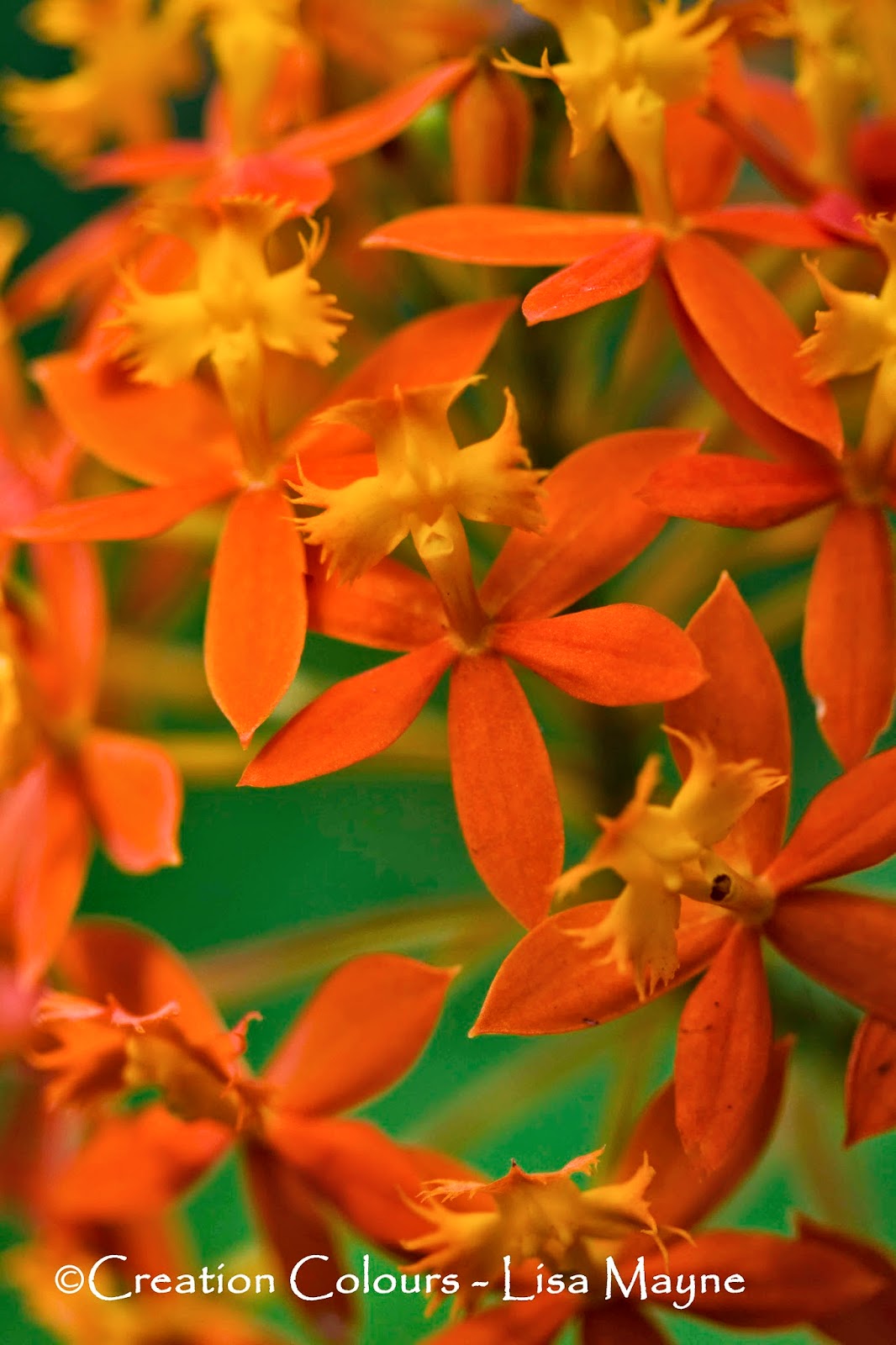
Still on the flowers in the garden camera rampage, I set myself the challenge of the crucifix orchid. These are small flowers that grow in a round bunch. By focusing on one, and in particular one head, I was able to have some success. I did need to play with the in Photoshop a little to get the colours right.

Canon EOS 50D, f/2.8, 1/640, ISO 100

Canon EOS 50D, Macro lens, f/2.8, 1/200, ISO 100 100mm
Two different styles are above - one within, one standing out from the bunch. Both have their merits. If it wasn't for the dead flower in the second one, I would prefer it because it has a little bit of light flowing in from the top left corner. But I do like the top one, within the bunch, with one flower in focus.

The next is bougainvillea. These guys are everywhere but that doesn't diminish their beauty. They are fascinating because their petals are very leaf like and  they have remarkable shapes. I did enjoy shooting them even if I had to work around them very carefully!

Canon EOS 50D, Macro, f/2.8, 1/250, ISO 100, 100mm

Canon EOS 50D, f/2.8, 1/200, ISO 100, 100mm
 The colours in these was really tricky to hande in photoshop and I think these came out a little, well, to use the technical term, splotchy. They were too dark - why are my photos always too dark? - so not enough detail was captured. Still, they are impressive pieces of nature. It just goes to show that me and my camera are no match for the creator!

Finally, there is this photo. I have included this to remind myself that beauty is not only found in flowers. Leaves are beautiful too!

Canon EOS 50D, Macro lens, f/2.8, 1/250, ISO 100, 100mm

Saturday, June 7, 2014

My Sister's Garden - Part 1

My sister is married with two kids, and they have a house with a gorgeous backyard. Not because it is perfectly manicured, but because it is free. Flowers, trees, veges and chooks. It's a slice of natural heaven. So when visiting, I decided it was the perfect place to test my Macro Lens. There were too many photos taken for one post so I have split them into two.

The first inspiration was this wonderful flower. I have no idea what it is called, but its shape was stunningly intricate, and struck me as soon as I walked into the backyard as something my macro would have fun with...

Canon EOS 50D, 100mm Macro Lens, f/4.5 1/400, ISO 640, 100mm

Canon EOS 50D, Macro LEns, f/4, 1/400, ISO 640, 100mm
I like the first one because of the background composition - I like the green fronds against the corregated iron, but it is blurred enough to not be harsh. The second I like the perspective, and the points. The colours gave me a lot of grief in this one though. For some reason, when I open RAW files the red diminishes, it goes very orange. I will need to research this because it is very challenging to bring the red back to the same depth that is captured by Betsy. But in adjusting the colours above, the purple tips were really enhanced which was a nice surprise.

The second challenge I set myself was the pink flowers. Their tips set an interesting depth of field challenge, and I had a great time experimenting with the focus.

Canon EOS 50D, Macro Lens, f/4, 1/400, ISO 640, 100mm

Canon EOS 50D, Macro, f/2.8, 1/400, ISO 640, 100mm

Canon EOS 50D, Macro, f/2.8, 1/250, ISO 100, 100mm
The first of these three is my favourite, as it has the buds in focus as well. I like the middle because the tips are in focus - effect created by lowering the aperture. The last, I love the blurred background.

Flowers never cease to amaze me! The array of colours, their beauty and intricacy. God's love letter to us!

Sunday, June 1, 2014

A Tale of Two Pilbara Symbols

There are many things that symbolise the Pilbara for me. This is one of the reasons this place is a wonderful place for photos. Everything has a meaning and a story to tell.

When more than one symbol connect, the picture created is even better.

One of these symbols is the sunset. They are truly magnificent in the Pilbara. I am of the opinion it is because of the vast open spaces, giving plenty of space to God to create his canvas of colour. We can see the big picture, with no buildings or structures interrupting our view. Just clouds of colours.

I hear that the best way to photograph sunsets is with a split filter. I have split filters, but have not yet used them much as I keep forgetting that I have them...oops. But in this case, it would have been tricky as I was photographing a sunset with another Pilbara symbol - the iron ore train.

One of the longest trains in the world and I would guess one of the most valuable. Literally millions of dollars are rattling by when they go past. Train tracks spread across the country as far as they eye can see, and waiting at a crossing for one of these bad boys to go past is not uncommon.

Thus sets the scene for this story. On our way home from Millstream one day, the sunset just got better and better, until I convinced my husband it would be a good idea to pull over. Luckily our friends in the car ahead had the same idea. We pulled off to the side of the road where we had one of these vast views and started snapping away. We realised that although we had a great view of the clouds, we could not see the horizon due to the railway track mound. When climbing on top of the ute didn't suffice, we decided to run to the track to see if we could get a better vantage point.

Rain is scarce in the Pilbara, but we had had some that week. Unfortunately, as nice as the rain it it usually means one thing for the Pilbara in the following weeks - insects. We ran towards the track, hit a mud patch with small stagnant pools. It was here that we were set upon by the most violent mosquito attack known to mankind! One swipe down your arm could kill up to 15 mosquitoes at a time, but that didn't stop the little critters from attempting to eat us alive! I am sure they were starving, and saw us as their salvation. They followed us all the way back to the car and we spent the remainder of our trip scratching every patch of bare skin as each one was covered with bumps and bites.

At least I managed to snap this baby. A split filter would not have helped in this situation due to the silouette effect, and I had to crop some power poles out, taking away the wide angle effect, but in the end, I love what it symbolises - The Pilbara. Mosquitoes and all.

Canon EOS 50D, 10-22mm Wide Angle lens. f/5, 1/200, ISO 250, 21mm cropped. Slight enhancements in Photoshop.

Saturday, May 31, 2014

Pilbara Gems: Python Pool Extended into Infiinity

A few weekends ago we ventured beyond the cliff face of Python Pool to the pools above. We were aided by the fact a bushfire went through recently, taking with it the spinafex, allowing us to walk relatively smoothly over red rocks. We climbed down, and the pools coupled with the view was spectacular!

Given that it was nearly midday - why is it always nearly midday!! - the photo opportunities were low. I attempted a HDR to expose the reflection in the pool as well as the view. It did not work out well - I didn't have enough exposures to make it worthwhile - so I had to content myself with editing one exposure in RAW by lightening the shadows and darkening the lights. The result is not great quality, it appears a little washed out, but hopefully it gives you a sense of being there.

The still water created a reflection that was pretty spectacular.

Infinity pool above Python Pool. Canon EOS 50D, f/4.5, 1/125, ISO 250, 22mm.

Friday, May 23, 2014

Moonrise

So it is no secret that I am enamored with the Pilbara landscape. At times it is dull and repetitive but all the while striking and extraordinary. I am convinced that the closest place like it...is Mars. Seriously.

A lot of people do find the Pilbara dull and boring,depressing and remote, hot and humid. But I find that it is intricate and interesting, exhilarating and free....and....hot and humid.

While driving home on the Millstream Road we stopped to take a photo of the sunset. There are gorgeous sunsets over the landscapes here - one day I will do them justice, but not this day. This day, after failing yet again to capture the colours of that sunset I looked behind me to the moon rising over the hills of the Chichester Ranges...or something similar to them anyway. (I once heard someone describe them as the chocolate tops). It made me think of a painting I once saw of a curtain being drawn over the sky as the sun went down, like covers to keep the world snug at night (or in the case of the Pilbara, a very light sheet) with that tiny heavenly body the sun uses to reflect its light to the world to let it know it is still here, and will return in the morning. Rays of hope reflected towards you, of the morning and the sunrise to come.

So I did what I do. I took a photo.

Canon EOS 50D, f/4.5 1/100 sec, ISO 320 22mm


Wednesday, May 14, 2014

The Macro, Depth of Field and handheld photography...while balancing on Pilbara rocks...

...in bare feet.

What is the photographer's ideal when sighting a new wildflower to snap? Perhaps, having a macro lens already attached to your camera body, and that body already attached to a nice sturdy tripod that you can set up perfectly, not a breath of wind and good solid ground to stand on to get a good view in the viewfinder.

HA.

Welcome to the Pilbara. More specifically the Burrup Peninsula which is covered in rocks. Mounds of rocks. And that grass in between? Spinafex. What do I do when I go kayaking up the Burrup? I take my camera...and no shoes.

Here I am, climbing a rock mountain to test out my wide angle lens...in my thongs that I decided to ditch because they were more trouble than they were worth. I take an ordinary photo of the bay, and start to amble down when I stumble across a purple flower I had not seen before. You beauty! Luckily I had the macro in my backpack. Upon sitting down to change my lens however, I discovered not a skerrik of flat rock to keep one lens while I took the other off. I only have two hands, one of which has to hold the backpack and my thongs, the other that has to hold my camera, all the while unscrewing a lens, unscrewing the macro dust cover, switching the lenses, re-screwing everything, all the while not dropping anything to its certain death down the rock hill.


I achieved the impossible and miraculously managed to change to the macro without a single crash. So I set about trying to shoot this purple flower. Tiny they were, under a centimeter across. I had no tripod with me and there was a slight breeze. At 100mm, a slight breeze is all it takes. I don't know how long I sat on that uncomfortable, unlevel rock, precariously clutching my camera at all focal lengths trying to get the depth of field just right...only to have a breath of wind breeze past moving the flower just far enough out of focus to ruin my shot. Incredibly frustrating. I employed a quick shutter and patience....and many many photos. (I had to stop and delete some off my full card...twice). Eventually I got a couple.

Canon EOS 50D f/2.8, 1/1250, ISO 100. 100mm macro


Canon EOS 50D f/6.3 1/400 ISO 100, 100mm Macro - Cropped

Canon EOS 50D f/6.3 1/400 ISO 100, 100mm Macro
I really quite loved playing with the depth of field. The tiny branches taught me a lot about focus...and patience. Hopefully next time it will continue to be better than ever!Still can't believe these guys were growing on a rock mountain.

Saturday, April 26, 2014

Time to Grab the Macro

So while adventuring to Deep Dale Gorge, we pulled over at a tranquil pool down Deep Dale Gorge. Armed with my smartphone and my bare feet I ran (well, what passes for running in bare feet over rocks) to the waters edge to throw some stone, see some fish jumping and take in the colours of the red wall, green foliage and crystal clear water.

The smart phone started snapping away. The reeds in front of me were attracting all manner of dragonflies. I carefully stepped forward, step by step, until I was standing in the reeds, surrounded by dragonflies and with only my smartphone in tow. Sure, I snapped a few dragonflies with my smartphone, but when I realised they would sit comfortably beneath my smartphone lens not 30cm away, it dawned on me it might be time to grab the macro lens I spent a lot of money on and was sitting on the back seat of my car.

Running again in bare feet back to the car, I grabbed my camera, swapped my lenses and dashed cautiously back to the reeds. Thus started the shutterbug, snapping, checking exposure and experimenting with exposure. Still getting used to using my fixed macro, I had to experiment with different exposure settings. I learned that in that particular situation, a fast shutter speed was key given the propensity for camera shake and wind.

It was almost as good as the butterflies at Iguazu Falls.

Canon EOS 50D f/5, ISO 100, 100mm (Macro)

Canon EOS 50D, f/5 1/320 ISO 100, 10mm (Macro)


Canon EOS 50D f/3.2 1/500, ISO 100, 100mm (macro)
Guess who loves the macro??

Needless to say, I had a lot of fun. I could fill this post with numerous happy emoticons.

I do still need to master editing and reducing the grainy noise that cropping causes. But I think I can safely say that at the moment, my macro is my favourite.

Tuesday, April 22, 2014

The beach approaching mid day

One of the great things about living in the Pilbara is the lifestyle. This Easter weekend, my husband and I went kayaking again, once more to Conzinc Bay. Now, reaching your destination at 10:30 in the morning may not seem like such a big deal. But once you have a swim, a bit of a fish and a chill out on the beach, the next thing you know it's nearly midday and you haven't taken any photos!

I did however manage to test out the wide angle with the polarisor this time, so that was pretty nifty. Except  I discovered two things - one, that because of the extreme wide angle of 10mm and the high sun, it produced many flares in my lens. This was corrected in photoshop with a little bit of cloning, but still it's rather a pain. The second thing I noticed is that I have dust on my mirror, which I will need to fix somehow.

Any way, below are some of the photos taken that celebrate the glorious day and being alive!

I love the first image below because of the fish. One of the marvelous things about a polarisor is the reduction of glare in the water, so you can see things like these guys! They were fantastic though, every now and then they would be spooked and leap from the water in unison. Fantastic.
Canon EOS 50D f/10, 1/250, ISO 200 11mm
Of course, all of these photos have been edited in Adobe RAW in Photoshop. The white balance has been warmed, vibrance and saturation increased and some of the horizons corrected.
Canon EOS 50D f/6.3, 1/320 ISO 100 10mm

 The fish make an appearance below once more! This photo has actually been copped to remove a large clump of weed and its shadow that got in the way...
Canon EOS 50D f/10 1/250 11mm
 My conclusion? The wide angle is fantastic at the beach, even at midday. I always long for the day we can camp on the beach so as to utilize the sunrise and sunset. It would be magical.

Canon EOS 50D f/6.3 1/320 ISO 100 10mm

Thursday, April 17, 2014

Roses are...Pink (aren't they?)

Again, another experiment with the black and white. First though, a little introduction (and a touch of photographer envy).

Cameras, good cameras, are a dime a dozen at the moment, especially in the Pilbara. Everyone is taking photographs with fancy cameras. I sometimes worry that I am just another hick, jumping on the bandwagon, thinking I'm fancy because I've got myself a DSLR, can twiddle a few dials and tweak a few things here and there in Photoshop.

Then I see friends post amazing photographs on Facebook, or seem them on their blogs, or in their Photobooks and I groan. "I know how to do that," I'll say, but internally knowing the truth that knowing how and actually doing are two completely different things.

So, twice in the past month I have set myself the challenge of not actually saying "I know how" but actually doing. Much easier thought than done, as it turns out.

One photo that regularly makes the portfolio of the budding (excuse the pun...you will get it in a minute) photographer is the black and white flower. Enter challenge number one - a black and white rose. (Roses were the flowers that week).

I set up my tripod, precariously on the table, and got my remote out and made sure my subject was well lit. Let the dance begin. The Macro was on, the tripod was moved forward, backward, up, down, tilted and adjusted. As were the flowers, the vase, the leaves, the flowers, the petals. Pretty much everything was touched or tampered with in some way.

I took dozens of photos. Some came out. Some didn't.

Best of a bunch - Canon EOS 50D f/32, 15 seconds, ISO-1000, 100mm (Macro). Still getting funny exposures - ISO 1000??? What's with that? What was I thinking? This one was also edited in RAW to correct the white balance for our orange lights in our dining place, increased contrast, and vibrance.
 That was the easy part. Well, actually no I lied. It was hard.

A month later I messed with the colours to try and make them go black and white, to which I succeeded. It's not that hard to make a black and white photo. What is hard is when your subject is one colour and you want as much contrast as possible. In this situation I increased the saturation and contrast to make the shadows as dark as possible. See the step by step results below.

First I increased saturation to as much as I could bear.


I then converted to black and white.


At this point I tried a few things that didn't quite work, so I decided to crop it to just the centre of the Rose.


And then increased the contrast once more for good measure...


It's not as clear as I would like. It probably won't be causing any others out there any photographer envy. But it's a start.
Wednesday, April 16, 2014

...My Bubbles (you have to imagine the fish voice)

I have been contemplating joining the Red Dirt Camera Club for a while now. Finally, last week, I was not indisposed for their monthly meeting, so I toddled along. It was great to get together with fellow enthusiasts and learn from others in the same position as I am - experimenting and having fun.

Each month there is a topic, to which you submit your best photo taken during that month and you vote on your favourite at the next meeting. This month the topic is black and white. I have never done much in the area, except one or two conversions just to see how they look. At the meeting we were given a few tips which was fab, so I decided when I got home at 9:30pm to make a cup of tea and experiment. I converted a couple of my images to black and white, just to see what they looked like. Then I started to play. I changed the contrast and the saturation, constantly flicking between colour and black and white to see the effects in both.

I must say I was blown away by the difference in technique. It finally clicked with me (to whom the obvious is not always so) that, well, there is no colour in a black and white photo! You are relying on contrast and tone, composition and subject. For someone as passionate about colour as me, this was quite a challenge!

My favourite black and white photo was this one below. I may or may not enter it, it depends what happens next weekend. Believe it or not, this is a tiny corner of a photo taken of a wave hitting a bit of coral at Conzinc Bay, on the Burrup. I was testing my Macro lens on the coral, and it turned out there were bubbles in the picture! Woo! I increased the contrast to pretty much the max, and cropped it to size.

Canon EOS 50D f/2.8 1/4000, ISO 100, 100mm(Macro)
I'm not completely sold on the composition. Due to the depth of field, not all the bubbles were in focus, but I didn't want to make the picture too thin. Maybe bubbles are something to try again one day.

Monday, April 14, 2014

Native Flowers

So, I have been experimenting with my Macro lens, still getting to know it. I have also been purchasing more and more flowers, just to keep the place fresh.

I have noticed though, flowers don't last long in the Pilbara. The head wilts them, they soak up their water like a sponge, and well, they die. Quickly. (Unfortunately, so do my pot plants...).

So my solution was to buy some native flowers, in the hopes that they would withstand the conditions.

It turns out that these intricate flowers were also very fun to photograph with my macro.

Canon EOS 50D f/3.5 1/60 ISO 400 100mm (Macro)
I like this image for the swirl and the seeds and the pods. It may have been a little over edited, and I will need to find a way to deaden the flash I think, and also not to over saturate the colour in editing.

All in all though, I think it works. It is over saturated because I was playing with the contrast. More on that later...

Saturday, March 15, 2014

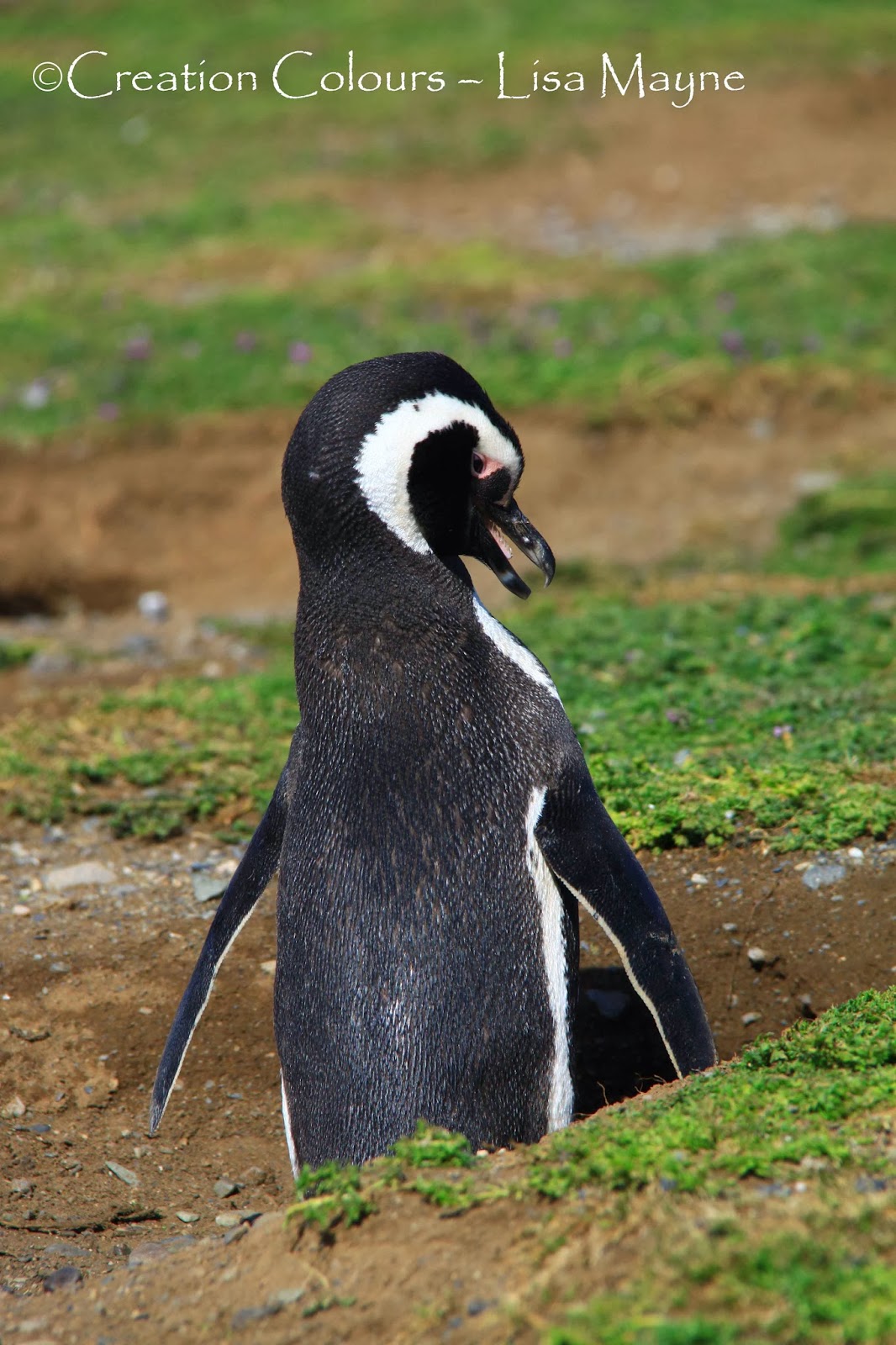
The many faces of penguins

Our last thing to do in South America (that I took photos of with my DSLR before running out of memory) was to visit the penguins in Punta Arenas. They were adorable little penguins that waddled around the island and were incredibly fun to take photos of! Here are the many faces of the penguins...

Canon EOS 50D f/11, 1/500 ISO 200, 160mm

Canon EOS 50D, f/8, 1/800, ISO 200, 200mm

Canon EOS 50D, f/8, 1/800, ISO 200 200mm
As mentioned above, after this point I had filled all three of my memory cards and between this point and arriving in QLD we did not have a chance to copy them to my portable hard drive so in Santiago I just had my smartphone. It was OK really, we just visited Christmas markets and the like.

So that's the end of the South America photos. After blogging about it, I realise that my photos were more rewarding than I had anticipated while taking them. Even though they are not professional quality they serve as a reminder of the good memories I have of taking them. We had a great holiday and are grateful we are home safe and sound now.

I leave South America with another favourite, because of it's adorable quality. Guess who it reminds me of?

Canon EOS 50D, f/8/ 1/800, ISO 200, 80mm.

Friday, March 14, 2014

Day Nine in Torres Del Paine

The last day of our trek was really just the journey to Punta Arenas. It also happened to be a glorious day. We were lucky in that we had a great bus driver who was so enamored with the day he stopped to let us out to take photos at the last view of the towers. It was spectacular - definately one of the highlights and I was most pleased with the resulting photographs. One of those dancing for joy on the inside moments that you can't plan, they just happen like a subtle hint from God that he doesn't mind giving you little treats every now and then.

Torres Del Paine. Canon EOS 50D f/9, 1/1000 ISO 200 50mm. Two landscapes stitched. 
Ok, this photo is definately my favourite. I think. One of them at least. I know I've said that for about five different photos now, so maybe I should just leave it at the fact that I love this photo. Of course, it has been enhanced in Photoshop, but I love the colours, they really were that vibrant when we were there. It may have been enhanced but I promise you it is not by much - just a little contrast and a teeny bit of vibrance. It was just a gorgeous day.
Canon EOS 50D f/9 1/1000, ISO 200, 50mm
And what gorgeous day is not complete with flowers and a barbed wire fence? Of course! Why we didn't have weather like this while we were hiking I will never know...

Thursday, March 13, 2014

Composing the Towers

Having an hour at the lakeside of the three towers of Torres Del Paine was a great chance to scamper around and try and get the best shot. I have never before been so thankful for my polarizing filter that made the sky blue and the lake so green! But good composition for landscape requires interest in the foreground. This proved quite a challenge on the slopes of a moraine looking over a lake!

To clarify - 50 years ago the green lake was not there it was in fact a glacier. You can see what remains of the glacier below the towers. The slope we were on and that you can see to the left and right is what is called a moraine - rocks and debris that were pushed up by the glacier when it existed, and now it has retreated it has left the moraine in tact, and a glacial lake that is coloured by the minerals from the glacial water.

Panorama - portrait shots stitched together. Canon EOS 50D f/9, 1/320, ISO 200, 18mm
I like this photo because it inspired me to get a wide angle lens. It is a stitched panorama of three photos. I like the foreground with the rocks, leading your eye into the lake and up the towers. It is a pity the mist decided to cross at that precise moment, but otherwise I am happy with this composition.

Canon EOS 50D f/9, 1/400 ISO 200 18mm. Polarizing filter.
 I must admit this is another favourite. Maybe not as well composed as the first, the colours are what grab me in this one. With a polarizing filter and enough clear sky for that blue to contrast with the towers. Magnifique! I have this on a canvas on the wall. For me colour beats composition and even this composition is not bad. It almost fits the rule of thirds, kind of has a leading line in the lake...getting there.

Canon EOS 50D f/9, 1/400, ISO 200, 18mm. Polorazing filter
Finally, an alternative. I found myself taking a lot of portrait landscapes. I don't know if it is Pinterest influence or what, but I quite like a portrait landscape. This one is quite good with the rocks in the foreground, although the rock is a little too soft. I haven't quite mastered the depth of field thing yet. One thing at a time.

Wednesday, March 12, 2014

Why go to Torres Del Paine?

Torres Del Paine is beautiful but it is right down in the Antartic region of South America. Why go there and hike for seven days? What is the main attraction?

The main attraction are the towers - the three towers above the green lake. They are a stunning sight to see. Of course, just to get there is a 22km return hike up and down a mountain but it is well worth it. We had about an hour at the lakeside to have lunch and take photos on our last hiking day. (so did hundreds of other people...don't even get me started on the French family that managed to photo bomb nearly every person's photo. At least there were limited camera nerds). Below is my favourite photo from that adventure. It is a vertical panorama - three landscape photos stacked on top of each other. I tried putting it on a canvas but the size was just a little too tight. It belongs to a post of its own though. Tomorrow, I will share the composition challenges I had in this place, but for now, enjoy my favourite tower photo!

Canon EOS 50D f/9, 1/400, 50mm
It's not very imaginative, but I love the colours. The green in the lake, the grey, the white, and the yellow and orange that top the towers. We were lucky enough to have limited mist as well - just enough to make the shot interesting!

Tuesday, March 11, 2014

Light, colour and perfect timing

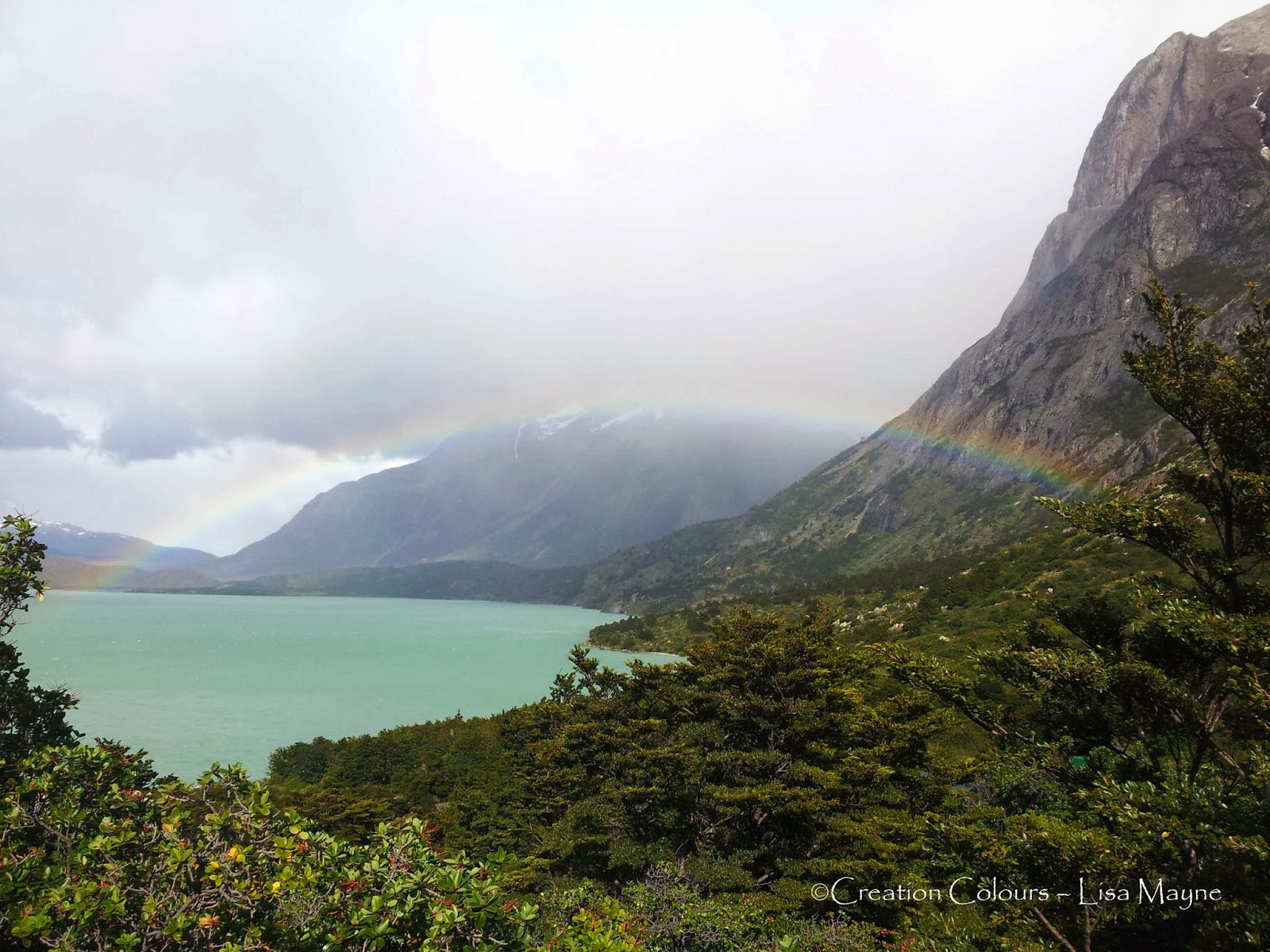
While trekking in Torres del Paine we had the privilege of seeing one of the most perfect rainbows I have ever seen. It was complete and if you looked closely you could see it was double. The most incredible thing about this rainbow is the amount of time it stayed around for. It was also incredible because it looked so close! Most of my photos however, were complete with rain drops on the lens, rendering them useless. I did snap one of the closeness. The other, taken from further away is a smartphone job. Not bad I don't think.

Canon EOS 50D f/11, 1/250, ISO 200, 60mm

Smartphone!


Monday, March 10, 2014

Rugged Patagonia Panorama

On the fourth day of our Torres Del Paine trek, my husband and I got permission from our guide to go ahead. This was so nice to be out on our own in the countryside. It was a very freeing experience. We had a chance to roam free and play in this beautiful part of the world.

Torres Del Paine is in the Patagonia region of Chile. Patagonia is stunning. It really took us by surprise how beautiful it was and inspired us to visit Antarctica one day (something by the way, I have always wanted to do!)

I took this panorama that fourth day. It was just a beautiful morning and we were able to stop whenever we liked and I just fell in love with the light, the mountains and had to stop and take this photo! I was pretty pleased with the outcome - the stitching, the composition, the colour all seem to work nicely. I love how it has the path in the foreground, the mountains in the background and the unique colours of gold and brown are prominent and stunning, albeit a little dark.

Two landscape shots stitched. Canon EOS 50D f/10, 1/400 ISO 200 32mm. 

Sunday, March 9, 2014

Good Morning Ice Castle!

After the precarious second day, we woke up the next morning feeling rather sore and sorry for ourselves. We sat on the balcony of the refugio and noticed that the peak of Grande Paine had fresh show atop. To me it looked like an ice castle and just absolutely stunning. It is awesome to see God's power in times like this - that places like Torres del Paine can be as breathtaking as they can precarious. This photo is interesting because the peak was so far away, I had to zoom right in. Still, I think it works.

Canon EOS 50D f/13, 1/500, ISO 200, 150mm
The walk that day was nice and easy with some spectacular scenery and we remembered why we were there in the first place!

Canon EOS 50D f/10, 1/400, ISO 200, 18mm

Saturday, March 8, 2014

Path to Paradise

Along the Torres Del Paine hike were some stunning scenes. The track was not the best maintained track in the world but it did have its moments (both good and bad). On the second day we came across this bridge and stopped for a snack. It was the highlight of the second day. I loved taking this photo because I had time to think about it. I love paths and not knowing where they are taking me. Little did I know this particular one would take me through snow, rain, wind, mud, steep hills, flooded gullies, slippery rocks and near death. The second day was not pleasant, let's just leave it at that. This blog is about the photos - I didn't get many more after this point because I needed to concentrate on not slipping off a mountain. This photo reminds me that there beautiful parts to that day as well.

Canon EOS 50D f/3.5 1/160, ISO 200, 18mm

Friday, March 7, 2014

Taking off for a hike

One of the last adventures we had in South America was a 9 day trek around the circuit at Torres Del Paine National Park in Chile. We crossed the boarder by bus (never doing that again...and you thought airport immigration took forever...) and headed straight for the park.

Hiking details were this: seven days of trekking, 140km, one mountain pass at 1200m altitude (through snow), mud and steep hills are common. The views were spectacular.

Day one was an intense slog of 30km to our first campsite. 30km in one day is a good effort. There were seven of us on our tour. At our lunch spot we were met with an interesting bird that looked like a cross between a turkey and a falcon. It is actually a Crested Caracara (I looked it up). This guy was really friendly, and I took some great photos of him except for one thing - he had a great lump of cheese in his beak. Who wants a photo of a native bird of Chile, stuffing his face with cheese? At least I got this shot below, that made me feel a little better. Quite a lot better actually.

Canon EOS 50D, f/8, 1/800, ISO 200, 140mm
I love this photo. I nearly cried when I saw it. I didn't see it until after the hike because I was preserving battery and not looking back over my photos except for a quick glance after shooting. Even though he is a really ugly bird, I love this photo, I love his wings, and his feet coming into land. I have one disappointment though - his left wing. I just missed the tip of his feathers! So frustrating! But otherwise I love it when I fluke it like this! (remember, birds and animals don't like posing for me!)

To give you a sense of the country side we were hiking in, see the picture below also taken on the first day. We walked up that valley, through some incredible wind. This wind made you feel like you were skydiving. Cold, windy, stunning hard slog pretty much sums up the trek!

Canon EOS 50D f/11, 1/800, ISO 200, 32mm